
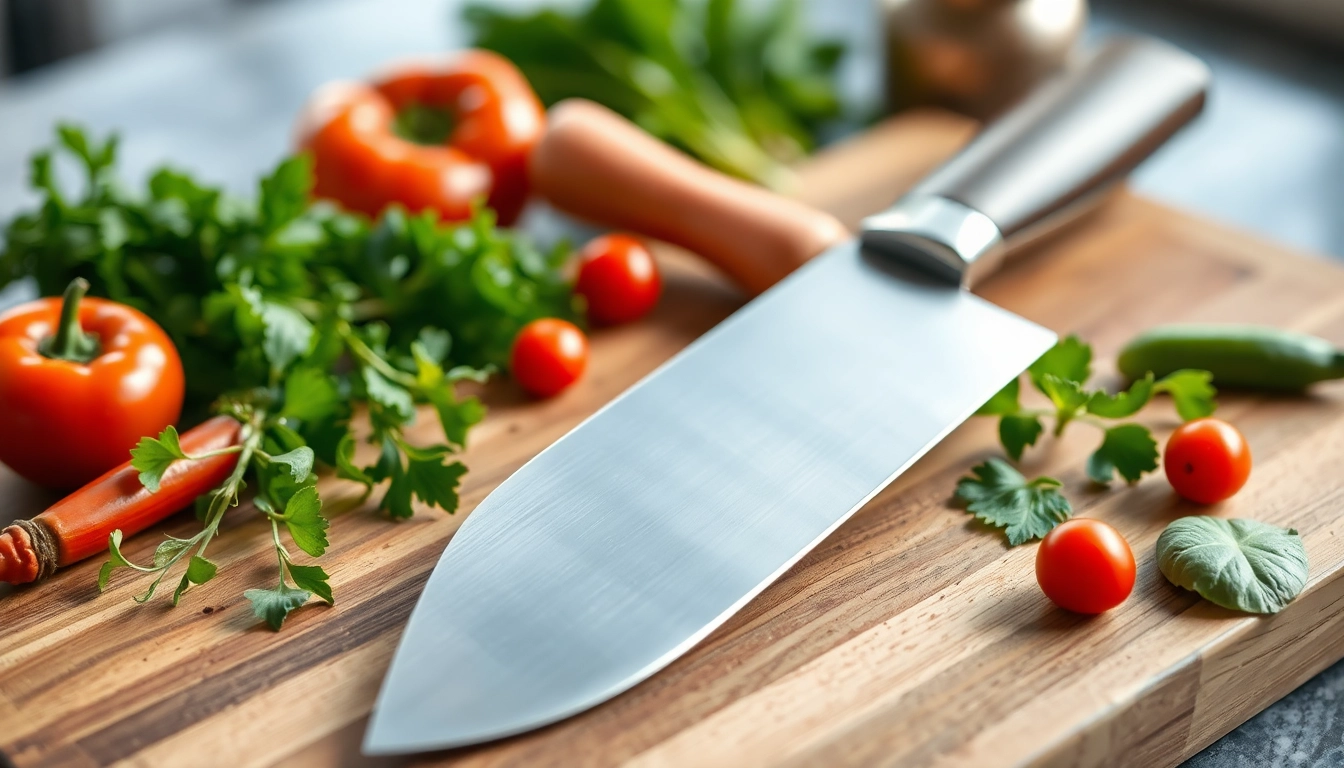
Understanding Chef’s Knives
What is a Chef’s Knife?
A chef’s knife, often regarded as the most versatile tool in the kitchen, is a must-have for both professional chefs and home cooks. Characteristically, it features a broad blade that tapers to a point, enabling a variety of cutting techniques such as chopping, slicing, dicing, and mincing. Most commonly, chef’s knives range from 6 to 12 inches in length, with the 8-inch size being the most favored due to its perfect balance between control and capability.
Different Types of Chef’s Knives
Chef’s knives come in various styles and designs, each tailored for specific tasks:
- Western Chef’s Knife: Typically heavier, with a wider blade, ideal for rougher tasks and larger ingredients.
- Japanese Chef’s Knife: Known for its lightweight and sharp edge, often made from harder steel, thus retaining sharpness longer.
- Santoku Knife: A Japanese design that’s great for dicing and comes with a shorter, broader blade, often featuring dimples to reduce friction.
- Kai Knife: This type, often known for its artful designs, combines aesthetic appeal with functionality, making it popular among culinary enthusiasts.
Key Features of a Quality Chef’s Knife
When assessing the quality of a chef’s knife, several factors play a significant role:
- Blade Material: High-carbon stainless steel is most preferred for its hardness and resistance to rust.
- Edge Geometry: The angle of the blade edge affects cutting efficiency; steeper angles yield sharper knives.
- Balance: A well-balanced knife will feel comfortable when chopping, with its weight evenly distributed between the handle and the blade.
- Handle Design: A comfortable handle ensures a secure grip and maximum control over the blade.
How to Choose a Chef’s Knife
Assessing Size and Weight
When selecting a chef’s knife, it’s imperative to consider its size and weight. The choice often comes down to personal preference and the type of cooking you engage in. Heavier knives can provide more force behind cuts, while lighter ones may offer more precision and control. Ideally, one should handle knives of different weights and lengths to find the most comfortable option.
Choosing the Right Blade Material
The material of the blade is a critical factor that affects the knife’s performance, durability, and maintenance.
- Stainless Steel: Known for its resistance to corrosion, it’s a popular choice, although it may not hold an edge as long as other materials.
- High-Carbon Steel: While it rusts easily, this material can be honed to a sharper edge and is favored by professionals.
- Damascus Steel: Renowned for its distinctive pattern, this type offers both beauty and resilience, though it may come with a higher price tag.
Evaluating Handle Comfort and Style
The handle is as important as the blade in determining the usability of a chef’s knife. Look for a handle that feels natural in your grip and ensures a firm hold, especially during extended use. The material can range from wood to synthetic composites, each offering different ergonomics and aesthetics.
Maintenance Tips for Your Chef’s Knife
Proper Cleaning and Storage
Proper maintenance extends the lifespan of your chef’s knife significantly. Always wash your knife by hand with mild soap and warm water instead of placing it in the dishwasher, which can dull the blade and damage the handle. Additionally, store your knife in a block, magnetic strip, or sheath to protect the edge and ensure safety.
Sharpening Techniques and Tools
Keeping your knife sharp is essential for efficient cutting. Various tools, including whetstones, honing rods, and pull-through sharpeners, exist, each suitable for different skill levels:
- Whetstone: Offers a traditional sharpening method; requires skill but provides excellent results.
- Honing Rod: Ideal for maintaining the edge between sharpenings and easy to use for beginners.
- Pull-Through Sharpener: Convenient but can remove more material than necessary if used excessively.
Signs of Wear and When to Replace
Watch for signs that it’s time to replace your knife, such as significant chips in the blade, excessive dullness even after sharpening, or a handle that feels unstable. An unreliable knife can lead to accidental injuries and frustrating cooking experiences.
Cooking Techniques and Chef’s Knife Usage
Basic Cutting Techniques Every Cook Should Know
Mastering the fundamental cutting techniques can greatly enhance your efficiency in the kitchen. Key skills include:
- Chopping: Quick, precise cuts often used for vegetables.
- Mincing: Extra fine cuts achieved by rocking the knife back and forth over ingredients.
- Slicing: Smooth, even cuts for meat and fish.
Advanced Techniques for Precision Cooking
For those wanting to elevate their culinary skills, advanced techniques such as julienne, brunoise, and chiffonade can transform your meal preparation. These techniques involve fine and specific cuts that not only enhance flavor but also improve the presentation of your dishes.
Common Mistakes to Avoid
Even seasoned cooks can slip into bad habits. Here are common mistakes to avoid:
- Using the Wrong Knife: Avoid using a chef’s knife for tasks suited to other specialized knives, such as paring knives for intricate peeling.
- Improper Cutting Techniques: Always cut away from your body and keep your fingers tucked in to prevent injuries.
- Neglecting Maintenance: Failing to regularly sharpen and maintain your knife can lead to safety risks and increase frustration in the kitchen.
The Importance of Personal Preference
Testing Knives Before Purchase
It’s crucial to test out a chef’s knife before making a purchase. Many kitchen supply stores offer the ability to handle various knives. Pay attention to how the knife feels in your hand, its balance, and how comfortable it is to use. Don’t hesitate to ask professionals for their insights.
Finding the Right Balance
Balance is vital for effective knife use. A well-balanced knife helps reduce fatigue and enhances control, allowing you to execute precise cuts without straining your wrist. When picking up a knife, hold it in a pinch grip and assess if the blade feels neutral when lifting it.
Understanding Your Cooking Style
Your individual cooking style will greatly influence the best chef’s knife for you. If you frequently prepare large meals, you may benefit from a heavier, longer knife for cutting and chopping. Conversely, if you focus on delicate tasks like slicing fish or herbs, a lighter, sharper knife might fit your needs better.
Ultimately, your choice of a chef’s knife should cater to your unique preferences and cooking styles. For in-depth guidance on how to choose a chef’s knife, it is beneficial to consider comfort, balance, and intended usage to make an informed decision. Selecting the right knife will not only enhance your cooking experience but also contribute to consistently high-quality food preparation.
About the Author